Tyler didn’t come up in the tree business. He came up in the Air Force, where the work is unforgiving about details and nobody gets to improvise on the fly. You brief the plan. Everyone knows their role and the sequence. You execute. Then you police the area before you leave.
That habit doesn’t switch off when the uniform comes off. What stood out after arriving in Northwest Florida and starting to cut trees was how little of it carried over into the trade. Crews showing up without a plan. Quotes given over the phone by people who never saw the tree. Prices that moved once the saws were running. Yards left with ruts in the grass and sawdust in the flowerbeds. Companies working without workers’ comp, quietly making their risk the homeowner’s problem.

So the company got built around holding it. Every job gets a brief before a saw starts. Every quote gets written down, itemized, and honored. Every site gets raked, blown and walked before the truck pulls out. Every crew member is covered, and the certificates are handed over on request rather than after a fight.
Tree work is dangerous, and it’s dangerous in ways homeowners can’t see from the driveway. A limb that looks solid can be hollow. A trunk under storm load carries stored tension that releases the instant it’s cut. A line that looks dead is energized until the utility says otherwise. The discipline isn’t decoration — it’s the reason the work stays boring, and boring is exactly what you want happening in your yard.
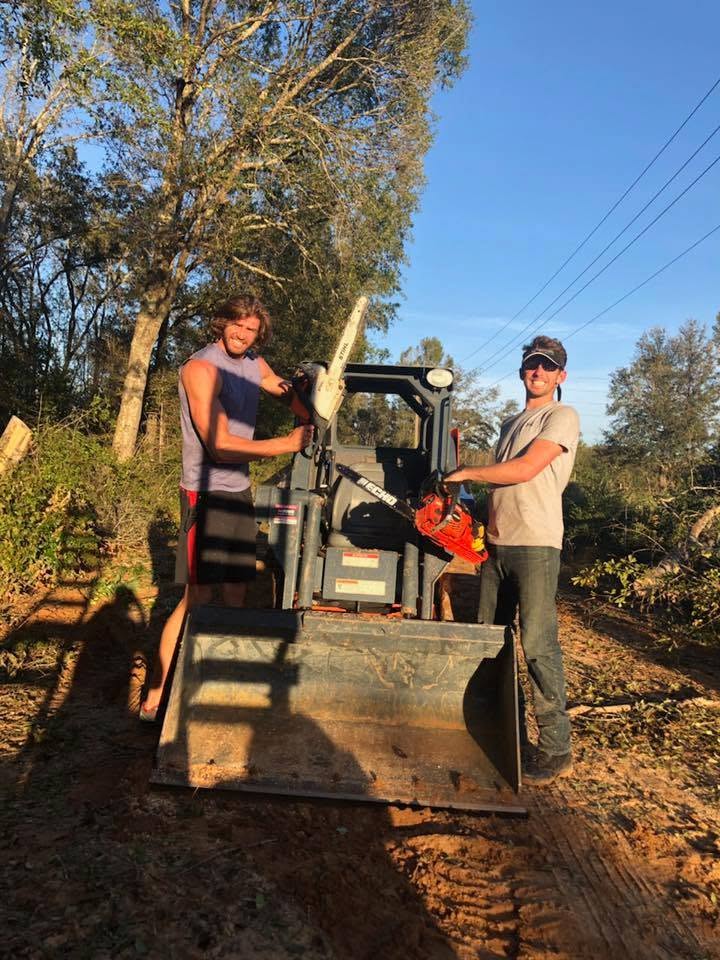
The name isn’t about a logo. In the service, The people beside you are the reason the plan works — you trust them with the part of the job you can’t see from where you’re standing. Tree work is the same. A climber sixty feet up is relying entirely on the person running the rope below him, and that person is relying on everyone else to keep the drop zone clear.
That’s the crew this company hires for and trains toward. Whether the job is a single palm in a courtyard or a full lot cleared for a build, the standard doesn’t move.
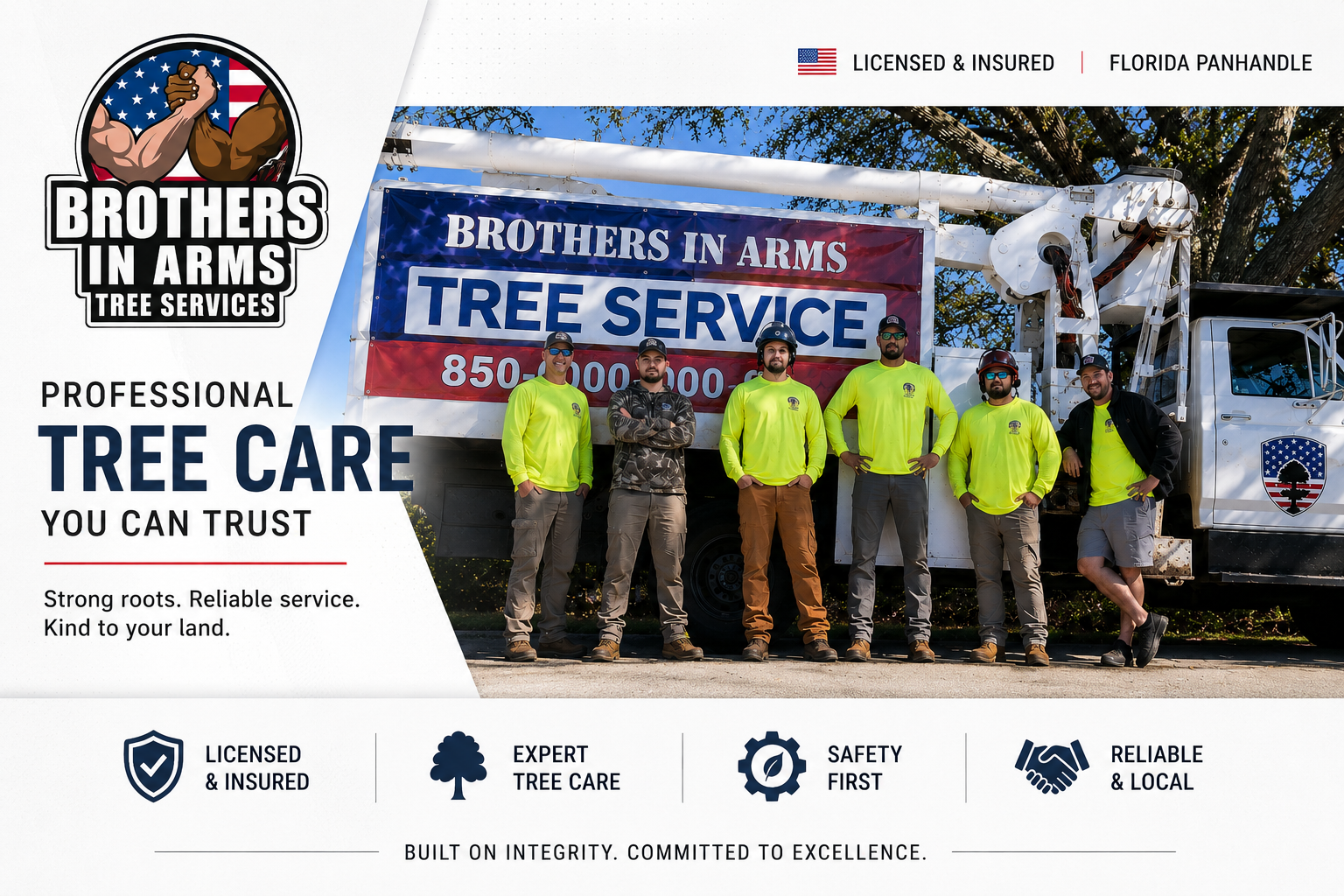
This is the part most crews skip, and it’s the part that decides how the rest of the day goes. Before a single saw starts, the crew runs these five points out loud on site.
Point 01
What is the tree, what condition is it in, and what is it threatening? Species, height, lean, decay, storm loading. The tree that looks straightforward from the street is often not the tree we find at the base.
Point 02
Overhead conductors and service drops, septic fields and drain lines, irrigation heads, pool cages, fences, glass, pets, and the neighbor's property line. Anything that changes where a piece is allowed to land.
Point 03
Where the drop zone sits, which limbs come off in what order, what gets rigged versus dropped, and where the anchor point goes. Everyone hears the same sequence before anyone commits to it.
Point 04
Who climbs, who runs the rope, who cuts on the ground, who keeps the drop zone clear. Nobody guesses what their job is once the saws are running and hearing protection is on.
Point 05
What we do if the wood behaves differently than expected, if weather turns, or if someone gets hurt. Where the first aid kit is. Which hospital. Who makes the call.
Then — and only then
Work proceeds to the briefed plan. If conditions change materially, the crew stops and re-briefs rather than improvising in the middle of a rigged cut.
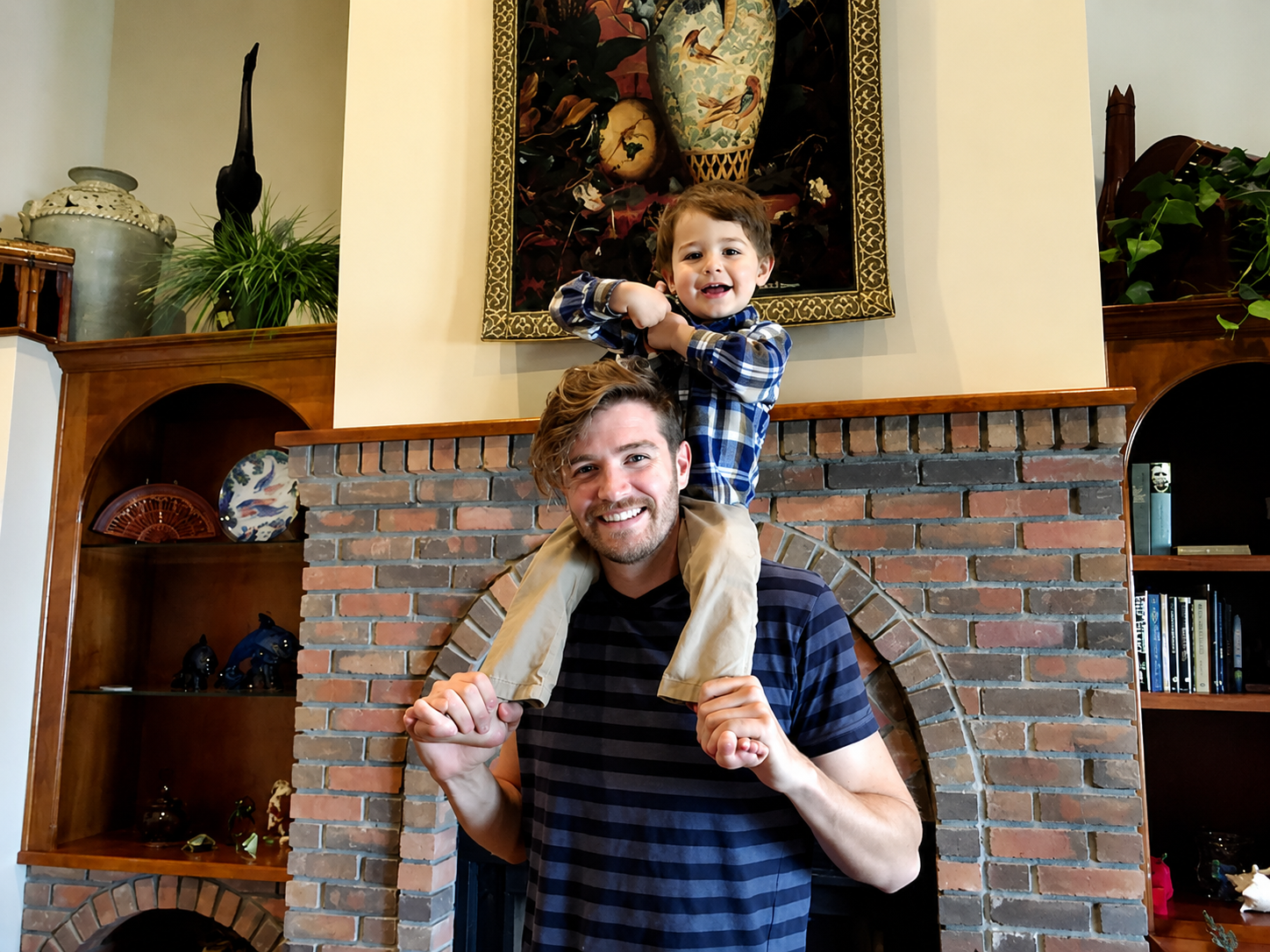
Owner · U.S. Air Force veteran
Tyler owns and runs Brothers in Arms directly. That means the person who walks your property and writes your estimate is the person accountable for how the job goes — not a salesman working a commission, and not a call center routing your address to whichever crew is free.
Most of his week is spent where the work is: assessing trees, quoting jobs, training crew and being on site for the difficult removals. He handles the equipment and safety standards personally, because in this trade those two things are the entire difference between a routine day and a serious one.
No franchise. No lead broker selling your phone number to three companies at once. When you call the main line, you’re reaching the owner’s business — and if something goes wrong, you’re talking to the person who can actually fix it.
Written, itemized, and it doesn't move once work begins. If something genuinely unforeseen turns up inside a decayed trunk, we stop and talk to you before spending another dollar of your money. No day-of surprises, no "while we're here" additions.
General liability and workers' compensation, with certificates available before work starts. Ask every company you get a quote from. If a crew isn't carrying comp and someone is injured in your yard, that exposure can end up being yours.
OSHA-compliant practices, rated rigging gear, correct PPE, established approach distances near energized conductors, and a drop zone nobody walks through. We'd rather take an extra hour than take a shortcut with someone's house underneath.
Full debris haul-away and a raked, blown site are inside the quoted price on every job. You shouldn't be discovering a disposal line item after the fact, and you shouldn't be raking your own yard after paying a tree company.
When corrective pruning is appropriate with pruning, we'll say so instead of quoting a removal. If it needs to come down, we'll say that too. The bigger invoice isn't automatically the right answer, and we'd rather keep the customer than win the job.
The people who quote your job are the people who perform it. Nothing gets handed to a third party you never met, never vetted, and can't hold accountable.
Tree work has a low barrier to entry and a high consequence for getting it wrong, which is a bad combination for homeowners. Before you hire anybody, including us, ask for four things.
A certificate of general liability insurance naming the coverage amount. A certificate of workers’ compensation — this is the one people forget, and it’s the one that protects you if a crew member is hurt on your property. Proof of licensing for the work being performed. A written, itemized estimate rather than a number said out loud.
Any company that hesitates on those four has told you something useful. We hand them over on request, before the work starts, without being chased.
Climbing gear and rated rigging hardware for tight-access dismantling. Chippers and dump capacity so debris leaves with us instead of sitting in a pile for a week. Stump grinders for finishing the job below grade. Heavier equipment for lot clearing and post-storm work.
That range matters more than it sounds. A crew that only owns saws has to talk you into the job its equipment can do. Having the right machine on site means the recommendation you get is about your tree, not about our truck.
See the full range on tree removal, trimming and pruning, stump grinding.
Headquartered in Destin, with crews running across Northwest Florida. If you’re between Pensacola and Panama City, you’re in our territory.
We’re based in niceville and run crews across Northwest Florida – Niceville, Fort Walton Beach, Destin and the surrounding communities.
Veteran-owned tree services – Insured tree service serving Niceville, Destin and Fort Walton Beach at a fair price.
© 2026 Brothers in Arms Tree Services. All rights reserved.
Niceville · Destin · Fort Walton Beach